

 Article by John Duncan
Casting Reviews by John Duncan, Richard Post and Parker Thompson
Intro | Asquith FAQ | Model Reviews
The 2026 G.Loomis Asquith is the final answer to many equipment questions and the solution to classic angling challenges such as wind, casting articulated streamers and fish that are out of reach, but this series raises equal questions about design, price and purpose.
The Asquith presents as something engineered in a space laboratory rather than grown in a garden. Its personality is audacious, but capabilities unmatched. Designed on empirical concepts and field tested by skilled, dedicated anglers, the Asquith is a blowtorch for the fishing pyromaniac. No angler has cast a similar fly rod. The feelings instilled by Asquith are those of adrenaline and impact, electricity, power, purpose and performance.
In this day of rapid technological evolution, we eagerly accept that a better tool could increase our success. Since there is nothing more enjoyable than casting a terrific fly rod and catching challenging fish, we recommend every serious angler cast an Asquith to find out for yourself.
Then, you can decide whether it’s worth the price.
This is a 2-part article. We’ll start by discussing the concept and character of the 2026 Asquith, as well as the technology within. The FAQs below reflect inquiries from curious anglers since these rods were announced in January, 2026, in combination with our own observations and queries as we’ve cast the new models one-by-one.
Many of our questions were answered in our in-depth interview with G.Loomis Engineering Manager Landon Myers, who has been a leader on the design team for 6 years and was trained by Steve Rajeff. Myers was a wealth of information on Loomis’s goals, as well as the design background, field testing and character of the final production fly rods.
The second half of this article is our traditional model-by-model review. The reviews were compiled and written by John Duncan with casting input from Richard Post and Parker Thompson, as well as John D. Most staff members of Telluride Angler have now cast the complete set of 2026 Asquiths. Many of their opinions are quietly incorporated in the model reviews, as well.
Add water, enter Asquith.
Asquith FAQs
Q: How are they materially different from the original Asquith?
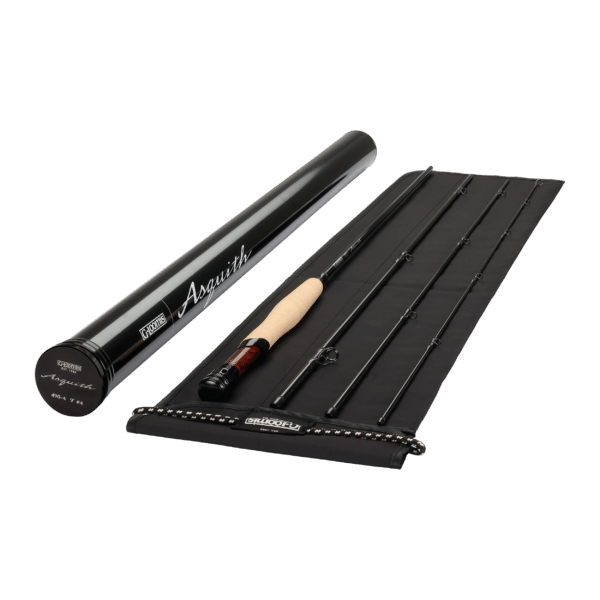 A: The blanks are still rolled in Shimano’s Spiral X production factory in Kumamoto, Japan, using their proprietary Spiral-X material winding method that adds torsional strength and resilience to graphite blanks. This is what makes Asquiths feel materially different from any other fly rod. The 2026 Asquith utilizes a new nano particle resin that adds stability while lowering weight in the rod blank. The result is termed “Spiral X Core” technology. While the reel seats on the the 2026 Asquiths are slightly heavier than their predecessors, the blanks are lighter, imparting the perception of a lighter fly rod. The truth is they weight about the same, but cast with tangibly lower swing weight, accentuating their “magic wand” nature.
Q: How do the actions compare with the original Asquith?
A: According to Myers, the original prototypes were faster action, thanks to greater efficiency and lower weight imparted by the new nano particle resin in Spiral X Core blanks. By adjusting the tapers in a cross-Pacific R&D collaboration between Japan and Washington, the international design team was able to tamp down the raw stiffness enough to make new Asquiths easier to cast, complementing their lower swing weight in a blank that will make every serious angler smile.
In the parlance of legendary rod designer Steve Rajeff, the 2026 Asquith is “progressive fast action,” meaning they flex evenly but are fairly stiff overall. Many “fast action” rods are strictly “tip action,” with soft tips and disproportionately stiff butt sections. Asquiths cast with predictability throughout the blank in the full range of casting distances, which makes them fundamentally easy to handle and pair well with a wide range of fly lines.
Freshwater models #4-#6 were field tested with the popular Rio Gold, but lines that are alternately heavier or lighter cast with equal predictability. Line weights 7-9 were developed on the Rio Bonefish and Flats Pro Tapers, whereas the 11-12 weights were tuned for the SA Amplitude Tarpon and Rio Elite Tarpon lines.
One characteristic that distinguishes Asquiths from all other fly rods is the ease of generating line speed. The feeling of line flying out of the rod tip with unbridled energy is simply unequaled in any other fly rod. After you cast an Asquith, it’s hard to cast anything else.
Q: Why are they all exactly 9 feet in length?
A: Similar to the 2016 Asquith, the 2026 Asquiths are designed as “quintessential fly rods” in each line weight, intended for maximum versatility and effectiveness. Myers explains that rather than making a broad array of specialty models, Loomis decided to put all of their R&D into perfecting core models with equal dedication and priority to all line weights.
Q: Is this an expert-only fly rod?
A: No, it’s a rod for anyone looking to take their game to the top level, but experienced anglers will gravitate toward them. The Asquith will be sought by anglers who are trying to solve fly fishing problems. In the words of Landon Myers, “The Asquith is oriented toward enthusiastic anglers, fly shop employees and guides who know what they like in a fly rod and can discern the difference between comparable models when fished side-by-side.”
Q: What is the difference between the saltwater and freshwater models?
A: Beyond the differences in components, the actions are quite similar: fast progressive. In talking with Landon Myers, we noticed that Loomis adheres religiously to a time-honored deflection chart against which every Loomis fly rod is measured with a standardized weight hung from the tip to record both overall deflection and flex pattern. The design team utilizes this tool to build a series of fly rods with familial qualities, no easy task when the series ranges from a 9’ 4-weight to a 9’ 12-weight.
If you like one Asquith, you’ll like them all. The angler may build a quiver that surpasses any other in versatility and performance: a 4-weight for dry flies, a 5 or 6-weight for heavy dries, dry-dropper and nymphing, a 7-weight for streamers and bonefish, a #9 for permit and stripers and perhaps an 11-weight for tarpon. Every rod feels light for it’s class, but punches well above its line weight in terms of casting in difficult conditions and catching plus-sized fish.
Q: Are they worth the price?
A: In our mind, it is a question of affordability rather than value. On one hand, the Asquith is $400 more expensive than any comparable rod, even though several competitors were introduced recently (Winston Air 2 Max, Sage Power R8 and Orvis Helios Gen 4 were all less than 3 years old and topped out at $1,250 in summer 2026). However, it seems reasonable that we can obtain the state-of-the art for less than $2,000. The finest fly rods don’t compare in price with high end shotguns (add a zero), and you’ll cast your fly rod a lot more than you’ll fire your shotgun.

Model-by-Model Review
Asquith 490-4 (9′ 4-wt, 4-pc)
John Duncan: I’ve never cast a 9’ 4-weight quite like this one. The original ASQ 490 cast from the center of the rod like a slingshot. This rod is truly “fast progressive,” starting with flex in the tip and loading slightly deeper with each increment of fly line. It throws automatic tight loops with a compact casting stroke while still allowing the caster to manipulate loop shape and line speed for softer presentations, slack line casts and reach casts. No other 4-weight offers this combination of control, line speed and lightness. It is simply in a league of its own. The Asquith 490-4 would be my first choice for dry fly fishing on all but the smallest rivers. At 9 feet, it would be an ideal light nymphing rod for pocketwater streams such as the San Miguel and Dolores, but where it surpasses all other 4-weights is in situations where the angler has enough room to make a real fly cast.
I first cast it with an SA Infinity Taper, which loaded the rod properly but seemed to lack in the shooting department. Next, I tried the Rio Technical Trout WF4, which cast as well as any rod/line pairing I have ever thrown in my life. The rod will easily handle a Rio Gold or SA MPX, but for dry fly casting in the 100th percentile, fish the Tech Trout.
I can’t imagine a finer dry fly rod for match-the-hatch rivers such as the Missouri, Green, Snake, Delaware, Yellowstone and San Juan.
Asquith 590-4 (9′ 5-wt, 4-pc)
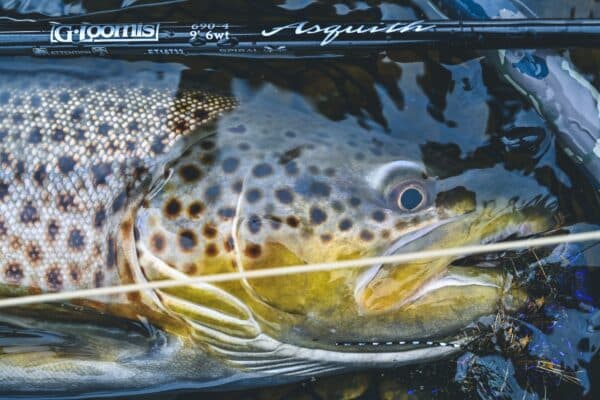 John Duncan: I preferred each Asquith freshwater model with a different fly line, cleverly suited to their respective line weights. Whereas my favorite line on the 4-weight is the Rio Technical Trout, my favorite on the 5-weight is the Scientific Anglers MPX, followed closely by the Rio Gold. With either line, this rod is an incredible caster, combining lightness with line speed and control as well as any rod I’ve cast. The Asquith series is for real. They offer a higher level of casting performance than anything on the market, at least in fast action fly rods.
The Asquith 590-4 must be the best drift boat dry fly rod on the planet. Line speed, leader turnover and accuracy are truly elite. This rod offers sensational stability for picking up a long fly line at the end of your drift and recasting to the bank, minimizing false casts as you change direction and placement. Casting in the wind is all about aerodynamics. Paired with either of the above fly lines, or the Rio Technical Trout, the rod forms instantaneous tight loops that leap from the rod tip, tugging at your line control hand demanding more distance. Fish it with a single dry fly (large or small), dry dropper or a nymph/indicator rig.
Parker Thompson: The 9’ 5wt Asquith from G. Loomis is a great all-around 5. Just like all of the Asquith rods, the 5wt is incredibly light in hand and has a very playful feel to it. This is a rod that will perform well regardless of what style of fishing you like to do with your 5wt. It has a tremendous amount of feel for dry fly fishing but also has enough power in the tip to fish a nymph set-up with ease. Mending and roll-casting capabilities are second to none when compared to other fast action 5wt rods. The rod offers an impressive amount of feedback to the caster and is as intuitive as any rod out there. It can also handle a relatively wide range of fly line tapers. My personal favorite is the SA Amplitude Infinity WF5F. With this line, the rod loads a bit deeper and excels in close.
“I believe the new Asquith 590 is a technical dry fly angler’s dream, if you lean towards a faster action style fly rod.” – Richard Post
Asquith 690-4 (9′ 6-wt, 4-pc)
John Duncan: The Asquith 690-4 has another gear for handling awkward rigs like streamers, nymph/indicator, the largest dry flies and bass bugs, all of which tend to “wag the dog.” The rod seems to understand the task and take control of the situation. I prefer it with a Rio Gold XP and other heavier weight forward lines. It feels slightly underloaded with a Rio Gold, but the XP optimizes the flex profile and taps the insane power found within the middle sections of this fly rod. With a Rio Gold XP WF6, it becomes “automatic.”
The Asquith 690-4 comes with a small Wells grip and modest fighting butt. For me, these are clear improvements over the original Asquith 6-weight. The grip is ergonomic and supportive for aggressive casting. Around here, the ASQ 690-4 will be a streamer rod, but it will certainly become an all-around favorite for any place where “a 6-weight is your 5-weight.” Its raw casting prowess is unequalled, yet the rod maintains a light-and-playful character typical of the freshwater models in this series (whereas the the 7-12 weights take more of a “razed earth” approach). This rod will handle any common streamer or bass line with ease, whether a Rio Outbound Short, Rio Predator or SA Titan. It has plenty of backbone for sink tip and full sinking lines, too, regardless of their taper. Many will say this is the ultimate 6-weight. It is notable that one of the Loomis rod designers consider this his favorite rod in the series.
Parker Thompson: There aren’t many truly well-rounded 6wt rods on the market; most are dedicated dry fly rods for bigger flies, nymphing-focused rods, or streamer fishing machines. The taper of this rod accommodates several different fly lines, allowing the angler to match the fly line to their specific needs. It’s a fair bit stiffer than the 5wt but still has the touch and feel we’ve come to expect from a rod in the Asquith family. With the appropriate line it throws beautiful loops at all distances and is surprisingly smooth given how stiff it feels in hand. I was shocked at how well the rod loaded immediately with very little fly line out the tip. This is a rod that I would want in my hands on any 6wt class river, whether I was nymphing, dry fly fishing, or pulling streamers around. It will be equally happy wade fishing or fishing out of a boat. I’ve had the chance to play around with several different lines but my favorite for all around fishing by far is the SA Amplitude Infinity WF6F. It will handle all variations of the Rio Elite Predator and SA Titan streamer lines as well.
“You don’t feel like you’re casting farther, more like the target moves closer, like a rangefinder is wired from the blank to your mind.” – Richard Post
Asquith 790-4 (9′ 7-wt, 4-pc)
John Duncan: Presenting more of a pure “tip action” than its predecessor, the new Asquith 790 has an essence of synthetic lightness and material superiority. Like all models in this series, the butt section is stiff enough to impart the potential for limitless distance in the hands of the skilled caster. This reduces feedback to the caster, however, so less experienced anglers may find this rod hard to associate. Control, line speed, loop shape and range are unsurpassed, but the angler must possess the skill to cast the fly rod, rather than expecting the rod to cast itself. It’s an executioner, not a school teacher.
The rod will handle any saltwater fly line, but the caster must initiate each stroke with rapid acceleration because the rod resists deep flex and recovers with blazing speed. It wants to cast tight loops long distance in response to power. This is a lightweight rod that “swings light” and demonstrates remarkable accuracy with an unwavering level casting loop.
In my hands, the Asquith 790-4 comes to life with a slightly heavy saltwater line. I preferred it with an SA Bonefish Plus over the regular Bonefish taper, as I could feel the Bonefish Plus pull a little deeper into the blank, flexing it smoothly and naturally, generating line speed more rapidly.
My last observation is that I strongly prefer the new Asquith grip. The former model was too chunky for my medium sized right hand, but the grip on the 2026 Asquith is ideal in diameter and perfectly contoured. I think every angler will find the grip comfortable, whereas the former Asquith grip was favored by casters with large hands.
Parker Thompson: This 7wt is a killer. It is happy in both freshwater and saltwater and remarkably easy to cast. It’s the type of rod that virtually anyone will cast well whether they’re new to the sport or have been fishing for decades. There are few 7wt rods that are smoother and more refined than the 790/4 Asquith. You’d have a difficult time finding another 7wt as well-rounded as this one. If you’re chasing large trout with heavy articulated steamers or sight fishing technical bonefish on a windy flat, this rod is exactly what you need. Most 7wt rods are designed to be either a freshwater rod or a saltwater rod; this rod doesn’t discriminate in the least bit. I’ve been lucky enough to try out popular trout and bass lines as well as tropical saltwater lines and this rod adapts to virtually all tapers. If you’re fishing heavy streamers consider picking up either a Rio Elite Predator or SA Titan line. The Titan is an admittedly tough line to cast on the grass but the Asquith does it with ease. If saltwater is on the menu, grab your favorite bonefish style line and have a blast.
“The line leaps into the backcast and hangs there, like there’s an electric moment when the line straightens out, a little charge that travels from the end of the line to the casting hand.” – Richard Post

Asquith 890-4 (9′ 8-wt, 4-pc)
John Duncan: The term is “optimized.” While new Asquiths lack the “playful” quality found in some fly rods, they are clearly the product of elite material design. At a cellular level, they simply feel different from other rods. Weight is perfectly distributed in the blank so that the Asquith 890-4 feels lighter than its competitors. Casting engagement with the fly line is automatic, but the caster must approach the rod confidently, rather than tentatively.
Like the 790-4, I preferred this model with an SA Bonefish Plus line, which loads the rod for short shots as well as the distance cast. Line speed is incredible. This 8-weight casts longer, tighter loops than any other. Anglers who fish slower action trout rods (Scott GT, Winston Pure, Sage R8 Classic, etc), will need to deliberately quicken their stroke to fall in stride with this al dente 8-weight, but every experienced saltwater angler will immediately recognize the design supremacy of this lethal fly rod.
The butt section of this rod is extremely strong and gives the impression that it could easily handle most permit, stripers and other 9/10-weight class fish.
Richard Post: I had the notion before I picked up this rod to cast that it had to be good, that it had to be the best, and I was not disappointed. The new Asquith 890 fills the role of the preeminent saltwater 8 weight, like the coolest guy at the party that rolls in fashionably late and everyone wants to hate. Except he showed up with all the best spirits, made everyone laugh, and bought anyone a room that had too much fun to drive home. Hard to hate on that guy. Also hard to not enjoy watching perfectly poised loops rip out of the tip of this remarkable rod. An SA Bonefish Plus WF8F was all I could hope for. The casting experience isn’t a sit back and sip casually kind of thing, but more akin to what I imagine flying a jet fighter feels like. You can feel the line speed building to the point of chaos, but it is smooth and controlled simultaneously. The energy traveling through the rod to the line is something exclusive to this rod and has a feeling that I don’t recognize across all fly rods. While there is a tremendous amount of power in reserve in the new Asquith 890, it is so much more than a down and out line slinger. The touch and connection to the caster as the line leaves the rod gave me the sense of hauling line with my fingertips, and very fine movements seemed to express an inordinately positive result.
If you are in the market for the most refined saltwater 8 weight, the new Asquith 890 should be at the top of your list. You know who you are, and you don’t just have one fly rod, probably not just one 8 weight for that matter. You are a discerning angler and don’t mind paying to have the bow to yourself for the day, because you choose to fly fish and you want the best experience. The new Asquith 890 belongs in your rod case.
“You can feel the line speed building to the point of chaos, but it is smooth and controlled simultaneously.” – Richard Post
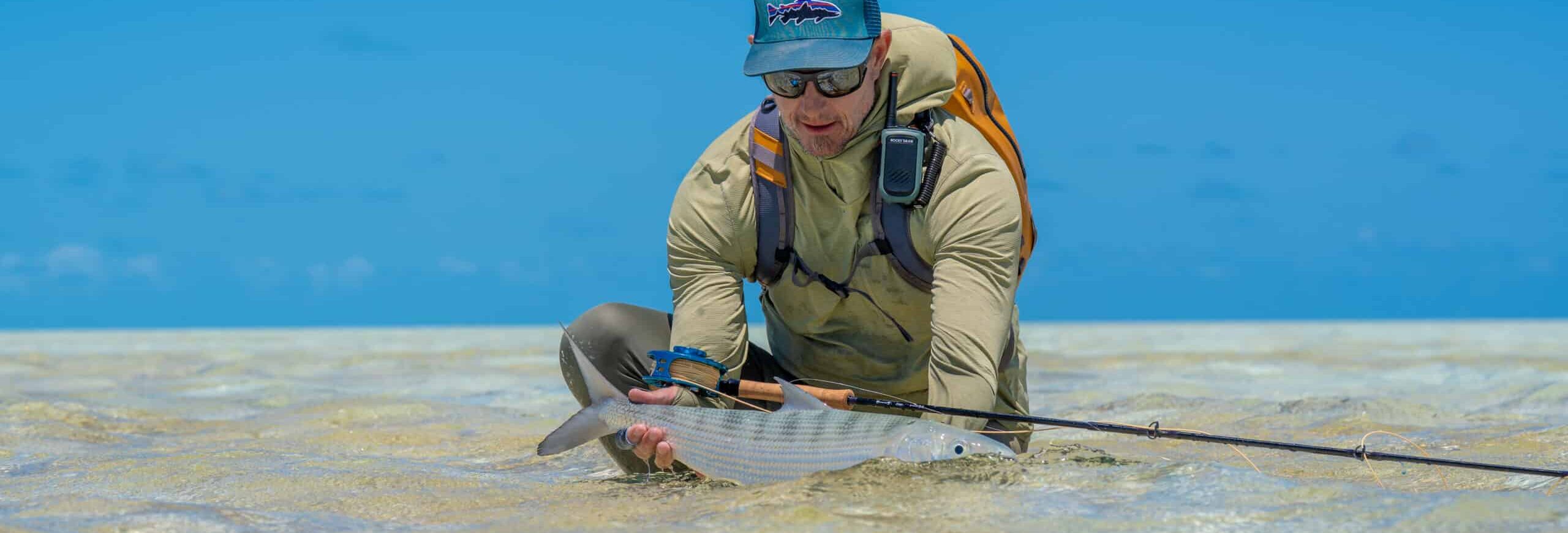
Asquith 990-4 (9′ 9-wt, 4-pc)
John Duncan: The new Asquith 990-4 feels lighter and cleaner than its predecessor. Cast with a Rio Elite Bonefish WF9, it throws the tightest loops in the greatest range of any saltwater fly rod I have ever cast. The material advantages of this model will actually translate to better fishing. 9-weights are heavy enough to fatigue the angler when casting them all day for striped bass, false albacore and other species for which blind casting is the drill. This rod will do more work with less effort than any other 9-weight. It will cast small flies (bonefish) with the tightest possible loops for maximum efficacy in the wind, yet possesses maximum power and bottom end stability for handling heavier lines (Jungle Titan, Outbound, etc) with larger flies. Off the beach, it will hold the line higher with more confidence for clearing the sand behind and surf in front. If you need a long cast, this is the longest casting rod, yet I felt that just about any angler would pick up the Asquith 9-weight and cast it easily at short and mid distances. For second and third shots, the Asquith 990-4 will pick more line up off the water with greater control and line speed than any other 9-weight, which increases the chance of catching a fast moving and elusive fish. While light and nimble, this is a 9-weight that I would fish for 10-weight species, including large barracuda, mid-sized tarpon, adult permit and even roosterfish.
Asquith 1090-4 (9′ 10-wt, 4-pc)
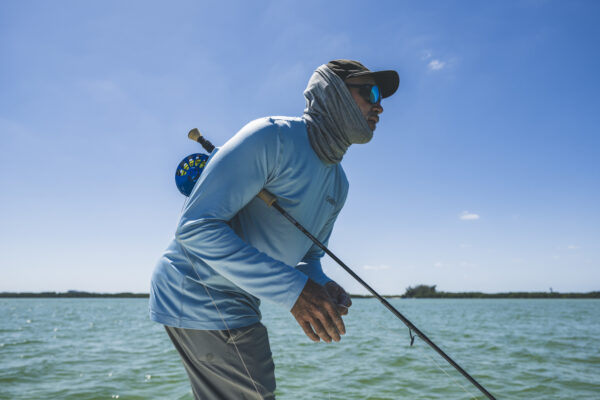 John Duncan: Loomis does the best job of designing a series of fly rods that all feel similar. The 1090-4 Asquith will be one of the most popular rods in this series because a 10-weight that fishes high in its line class is so darn useful. Like the 11 and 12-weights, the 1090 has a rigid bottom end which serves as launch pad for its springy upper half. It is incredibly stable and strong in the lower two sections, hard to overpower whether making an aggressive cast or pulling on heavy fish. The action is perfectly suited to modern 10-weight fly lines, including the Rio Outbound and SA Titan tapers favored in the jungle and on the striper beaches of the Northeast. The tip is sweet enough for short shots and the butt section stiff enough to lift a long line for 2nd and third shots at a fast moving fish, and also to lift heavy sinking lines from deep water or chaotic surf conditions. You’ll get your next cast rocking with greater command and fewer false casts. Line speed is sensational and tip feel is truly addictive. This rod is best in class for beach stripers, Baja roosterfish and trophy permit, and it’s the best tarpon 10-weight on the planet. It offers an unmatched casting experience and will be very hard to break.
“The 1090/4 Asquith is incredibly light in hand and one of the smoothest casting 10s I’ve ever handled.” – Parker Thompson
Asquith 1190-4 (9′ 11-wt, 4-pc)
John Duncan: Among my favorite rods in the series, the Asquith 1190-4 possesses the material and taper characteristics of the other models, but I found that it loaded most naturally with its chosen fly line, the Rio Elite Tarpon WF11. This is the line I want to cast on my 11-weight because it is ideal for fishing tarpon on a floating line. For me, the rod that casts a Rio or SA Tarpon WF11 best is the winner, and this rod wins. Some 11 and 12-weights are too much rod for me. I need a rod I can cast and often prefer rods that have less rote power and stiffness to those that I can swing easily. In these line weights, I don’t care how far my 6’4” linebacker friends can cast the stiffest fly rod. For me, the rod is only as powerful as my ability to tap its strength. So, I lean toward “easy casting” 11 and 12-weights. This rod bridges the void. It’s super easy to cast yet feels stronger than any 11-weight I have fished. It is lighter and sweeter than its predecessor.
If you loved any of the former Asquith saltwater rods, this model will surpass them. All 11-weights possess some real power, but many cast with workmanlike loops, dumping the line head and fly rather than sending them sweetly. This rod maintains line speed better at distance than any I have cast. Every angler will love this rod, but experienced tarpon anglers will find it has another gear, a secret portal to the next plane of flats fishing.
In addition to tarpon, the Asquith 1190-4 is capable landing heavy giant trevally and most billfish. It casts like an 11-weight but has the butt section strength of a 12-weight. For GT anglers who find 12-weights oppressive to cast (especially while wade fishing), fish this 11-weight instead. You’ll sacrifice nothing.
Asquith 1290-4 (9′ 12-wt, 4-pc)
John Duncan: As in the former Asquith series, the new 12-weight stretches beyond the ceiling. It is a lighter rod than its predecessor but still designed for the experienced caster who seeks the horizon of capability in a big game fly rod. It casts an SA Tarpon taper beautifully, with tight loops, as if presenting a size #18 BWO to rising trout. A strong caster will appreciate this quality when side-arming a small tarpon fly to oceanside fish in the Keys or spooky laid up fish in the Boca Grande backcountry, but most anglers will cast this rod best with a heavy-headed line, such as the SA Grand Slam or Rio Outbound. It’s the ultimate giant trevally rod, on condition of being paired with a heavy headed line. It is one of the few big game rods that we would actually recommend with a specialized GT fly line, most of which overwhelm lesser fly rods. First and foremost, GT lines are designed to transport and turn over large flies, but they never bring out the best casting qualities out of a fly rod. This rod can handle them, no problem.
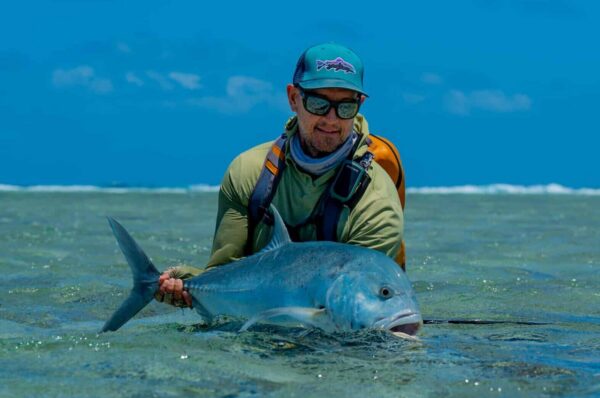 For those who fished the former Asquith, you’ll find the new ASQ 1290-4 to be lighter and sweeter in the tip, quicker to form a casting loop and generate line speed. It is a better caster at every distance and less tiring to fish all day. Butt strength is equal to or greater than its predecessor. In raw, mechanical fishing efficacy, it is a superior fly rod and perhaps the best open-class big game saltwater rod ever made, more than just a “12-weight.” Choose this rod if you are an experienced angler with a powerful casting stroke.
“The ASQ 1290 is a tarpon rod that casts like an 11 and pulls like a 13.” – Richard Post